Built from the ground up. Designed to keep evolving.
Architecture is only as good as what it makes possible. A selection of systems I have designed and delivered.
SIGNATURE APPROACH / METADATA-DRIVEN ENGINEERING
Define it in metadata. Generate the ETL.
I architected a framework for metadata-driven ETL generation, with configurable quality controls and operational monitoring. Repeatable logic becomes part of the platform; integrations evolve through shared rules.
01MetadataStructure & rules
02ETL generationStandardized implementation
03Operational controlsQuality & monitoring
Less manual development. More consistency. Room to evolve.
02 / THE APPROACHARCHITECTURE → OPERATIONS → IMPACT
See the whole system. Own every connection.
I work across the entire platform lifecycle, connecting technical decisions to the people and products that depend on them.
↳
BUILT FOR PRODUCTION
01
Complexity, under control.
Clear semantic models and engineering standards that give a platform room to grow.
02
Reliability is a feature.
Recovery, monitoring and SLA controls are part of the architecture from the start.
03
Independence, by design.
Open-source foundations, lower vendor dependency and deliberate decisions about TCO.
IRINA PAROSHINA / GEORGIAIP—01
03 / BEHIND THE ARCHITECTURE
Architecture. With an owner.
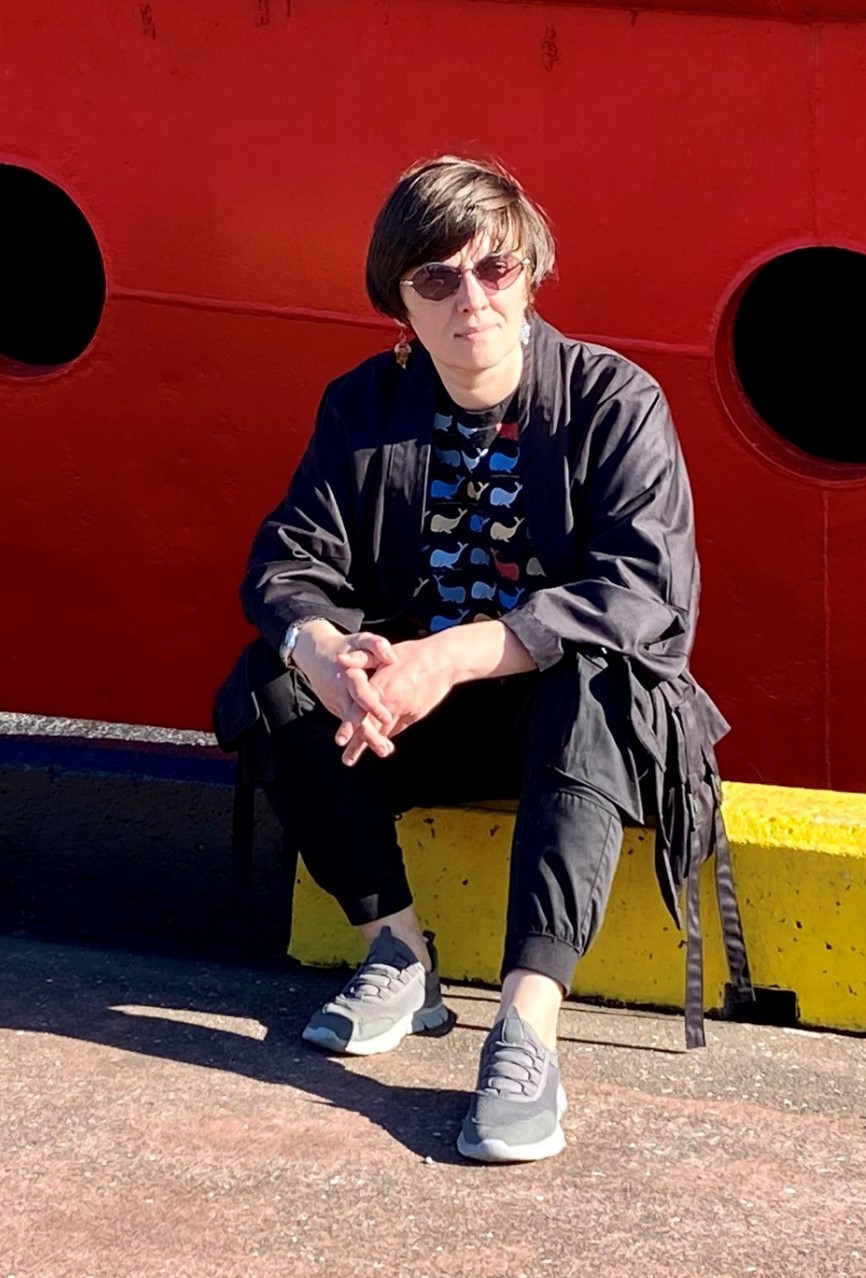
I’m Irina. I work across the full lifecycle of a data platform — from architectural decisions to production delivery.
My background spans physics and mathematical modelling, software development, data science and enterprise data architecture. I’ve worked across billing, CRM, finance and product — always with the whole system in view.
04 / WHEN TO BRING ME ININDEPENDENT ASSESSMENT / PRACTICAL ROADMAP
Your team is growing. Your platform is slowing it down.
When adding people and infrastructure stops translating into faster, more reliable delivery, it is time to examine the platform itself.
01 / SCALING
More engineers. Slower changes.
The team and data volumes have grown, but delivery takes longer. Each new source requires a custom pipeline, while critical business logic lives in SQL understood by only a few people.
02 / RELIABILITY
An incident becomes a manual investigation.
Stale or incorrect data, recurring incidents and manual recomputations. When a pipeline fails, someone has to trace which datasets, reports and decisions may be affected.
03 / COST
Costs outpace the business.
Infrastructure and engineering effort keep growing. It is difficult to distinguish necessary capacity from architectural overhead and repeated manual work.
04 / ARCHITECTURAL DECISIONS
A new stack. But is it the right answer?
A migration, a lakehouse, dbt, Databricks or Snowflake is on the table. Before committing, you need to understand whether the proposed change addresses the actual problem.
These symptoms can point to accumulated architectural complexity. They are a reason to investigate the platform — before assuming the answer is more engineering capacity.
WHAT YOU GET
An independent technical assessment. A roadmap you can act on.
A reasoned view of the constraints, risks and trade-offs, followed by prioritized changes: what to address first, what can wait, and where a stack change is justified.
Software and database engineering (2011–2016): payment systems, CRM, incident management and warehouse systems. Technology journalism (2008–2014): Computerra, CNews, IBM. Early development and research (2002–2009): C++, Fortran.
06 / NEXT CONVERSATIONDATA PLATFORMS / ARCHITECTURE / CONSULTING